Back![]()
Product background
Who's serious about marriage?
Key Stage #1
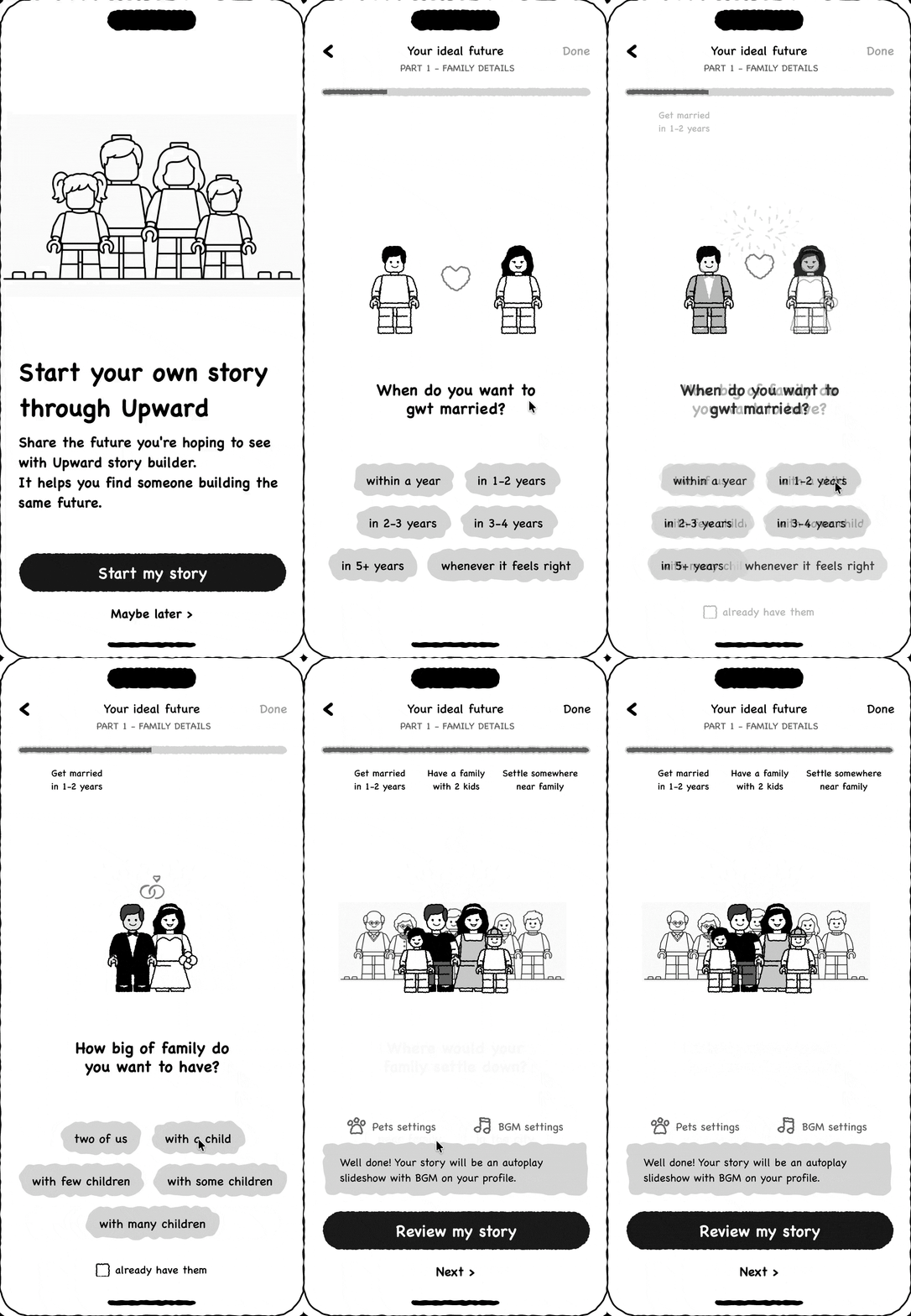
Fig.1: Visual progress
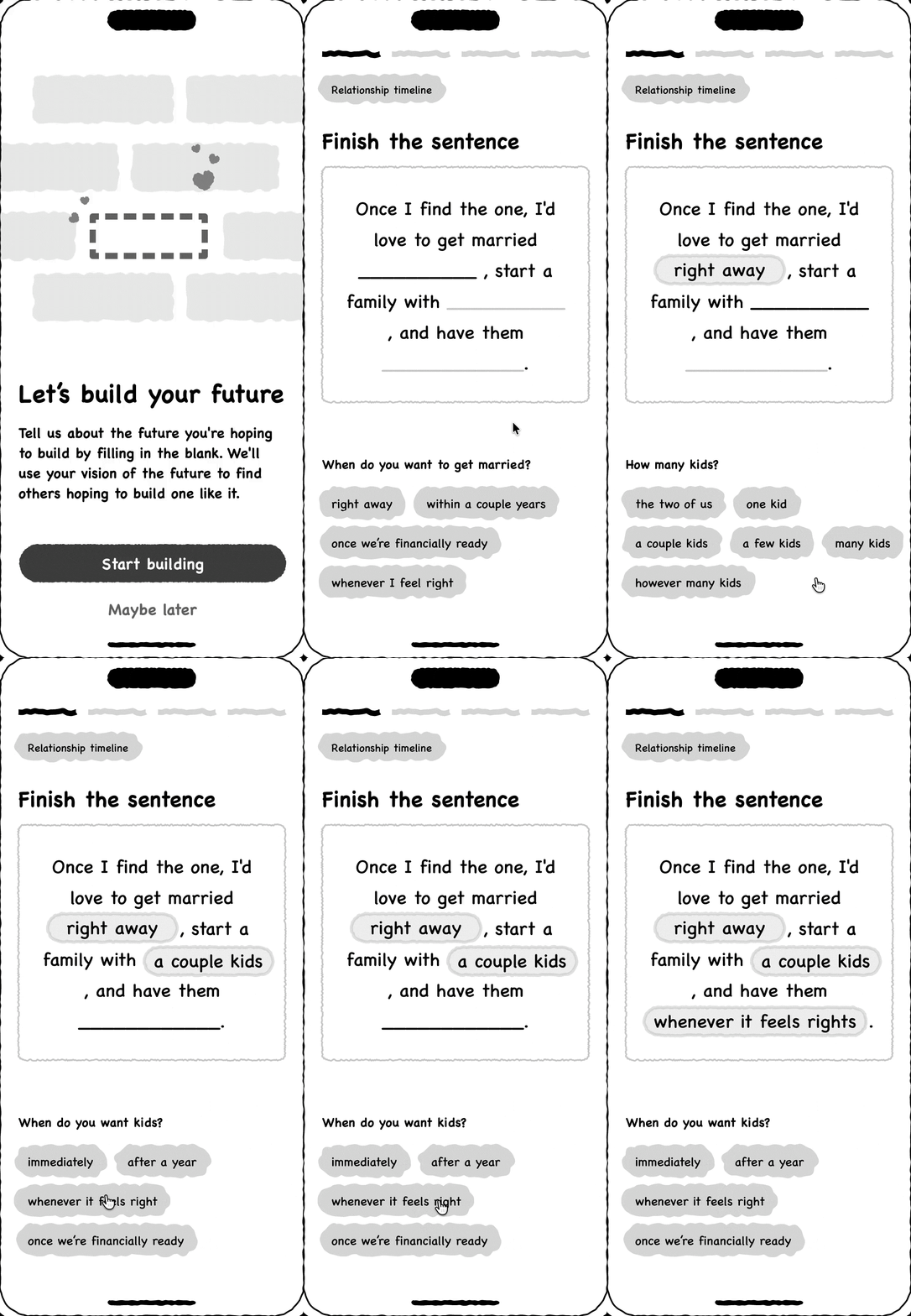
Fig.2: Story building
Key Stage #2
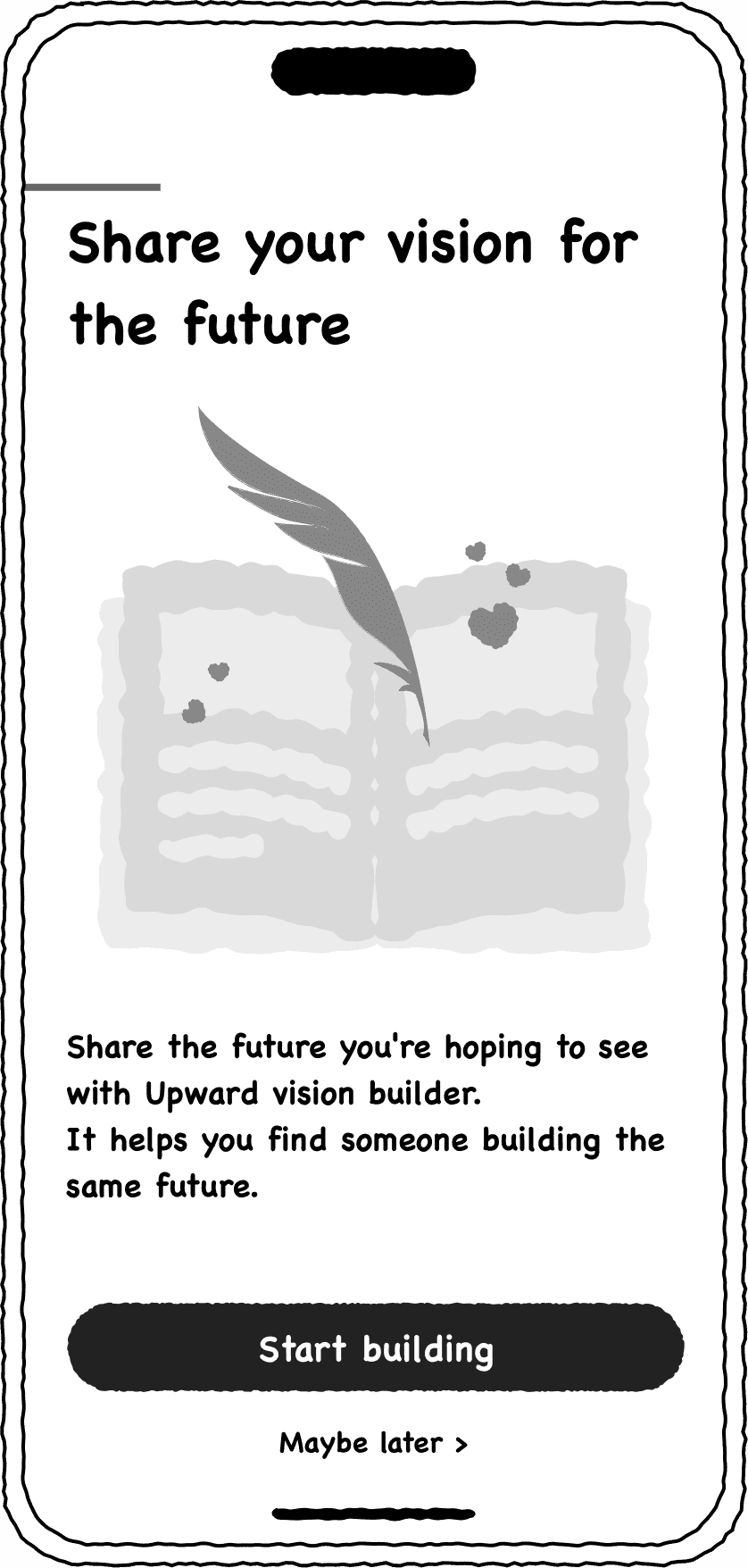
Fig.3: Option A
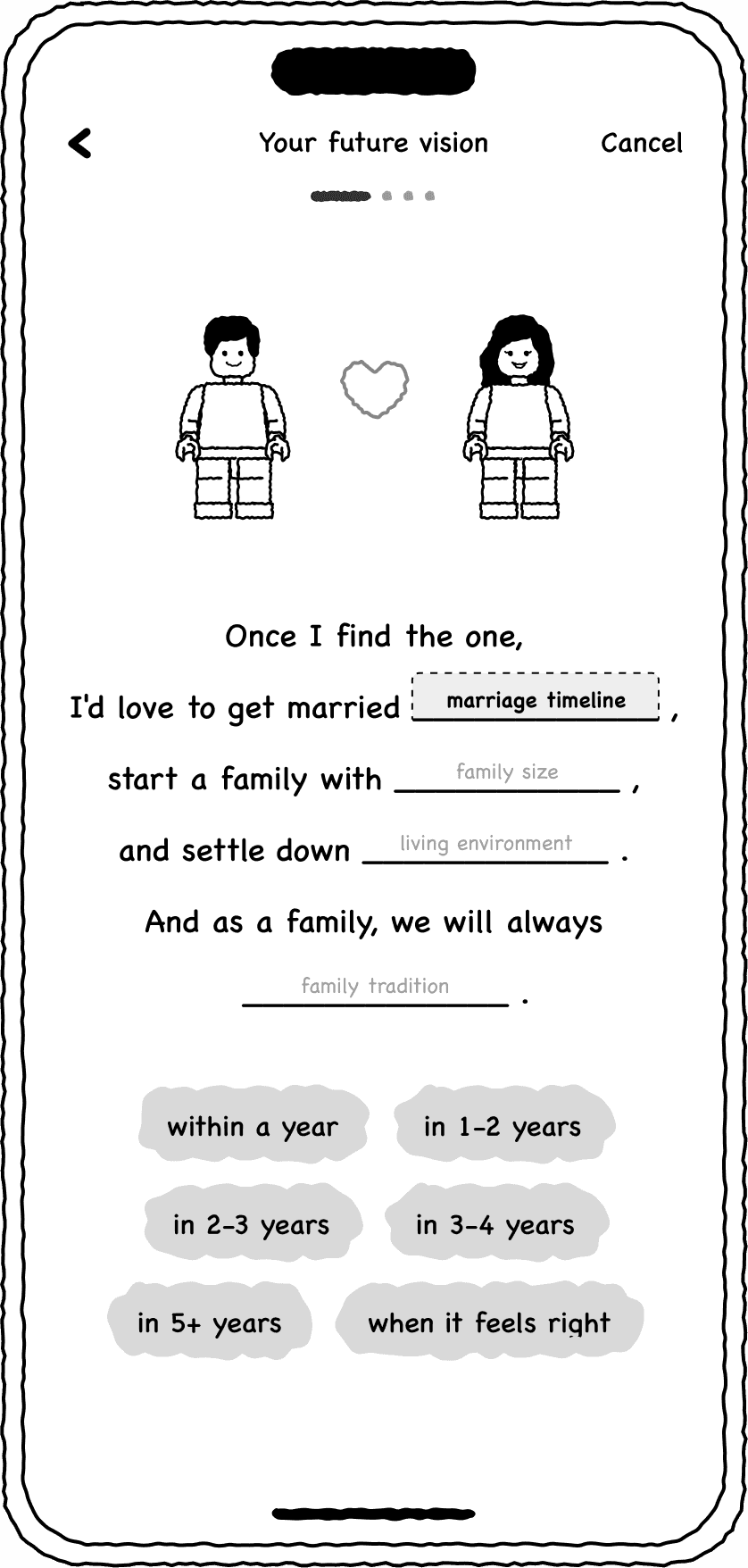
Fig.4: Option A
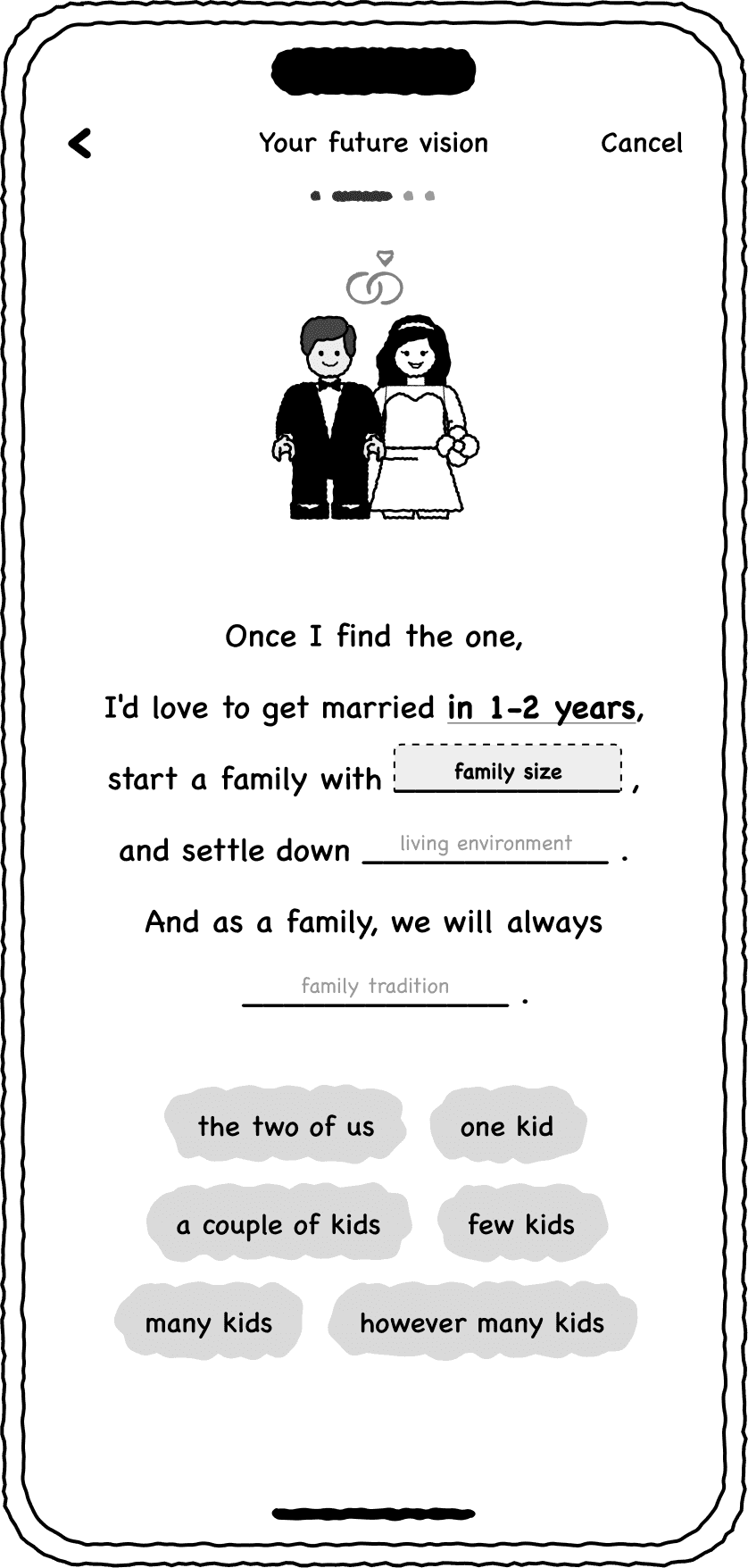
Fig.5: Option A
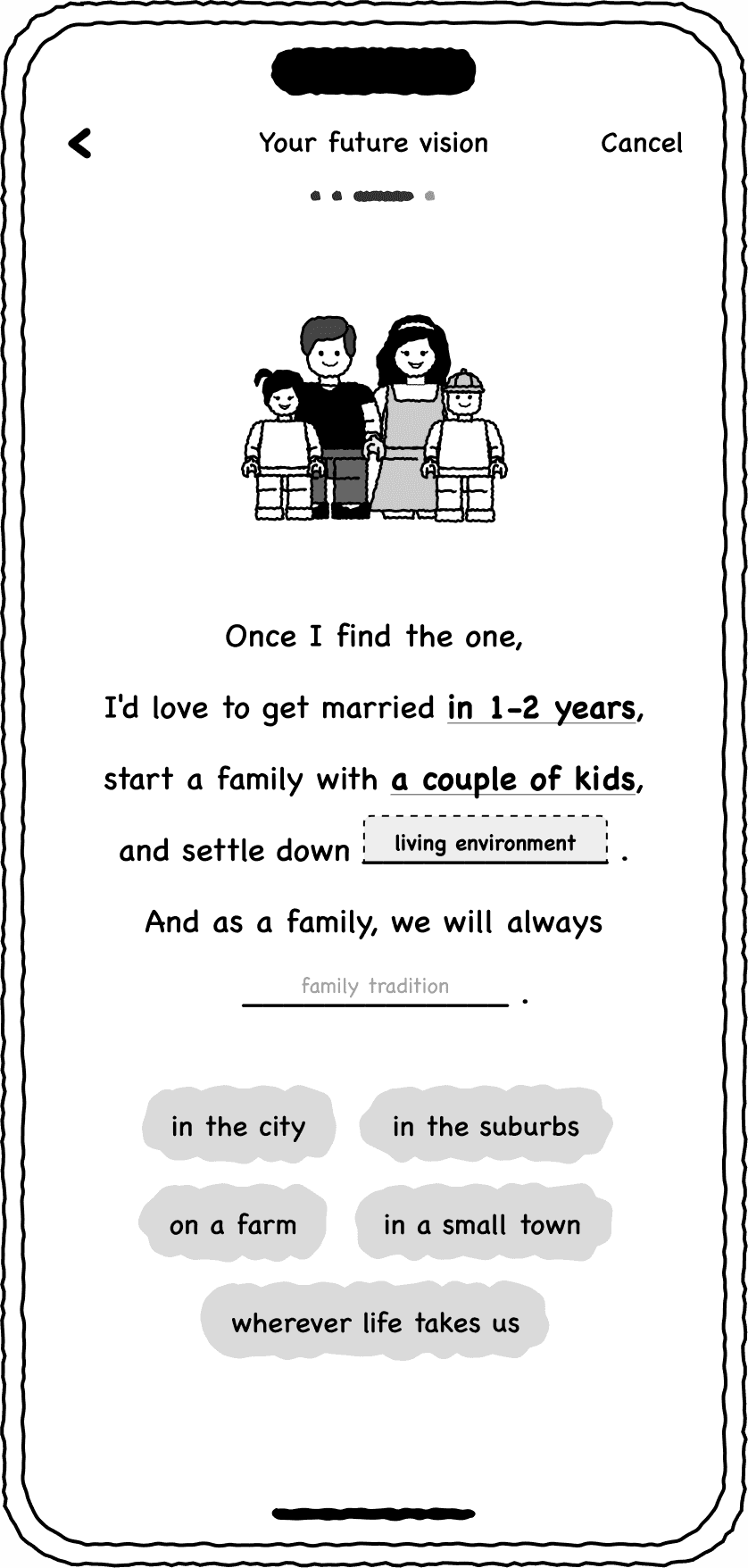
Fig.6: Option A
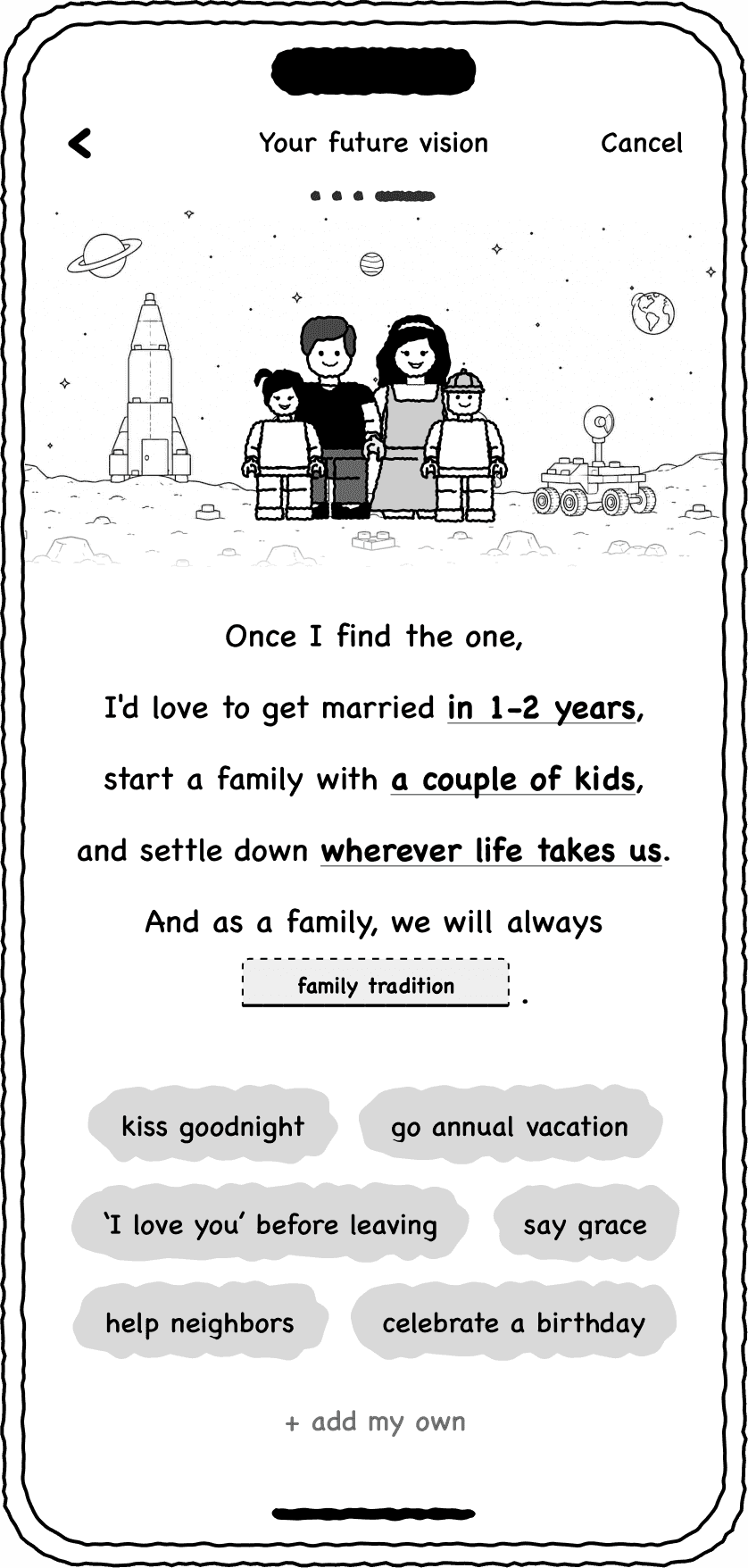
Fig.7: Option A
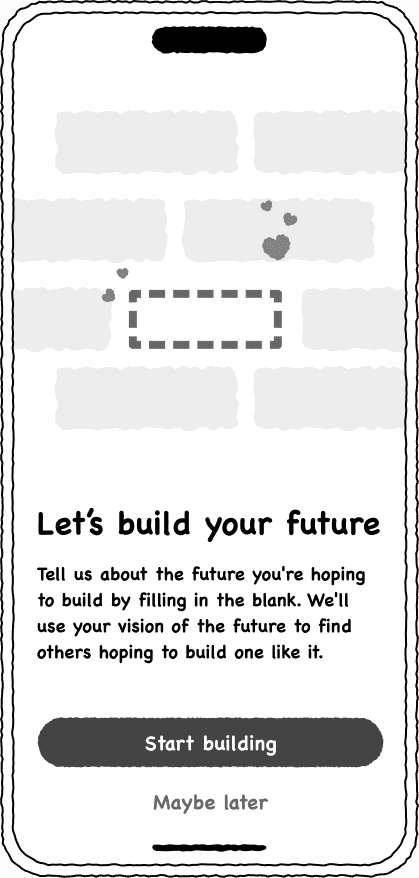
Fig.8: Option B
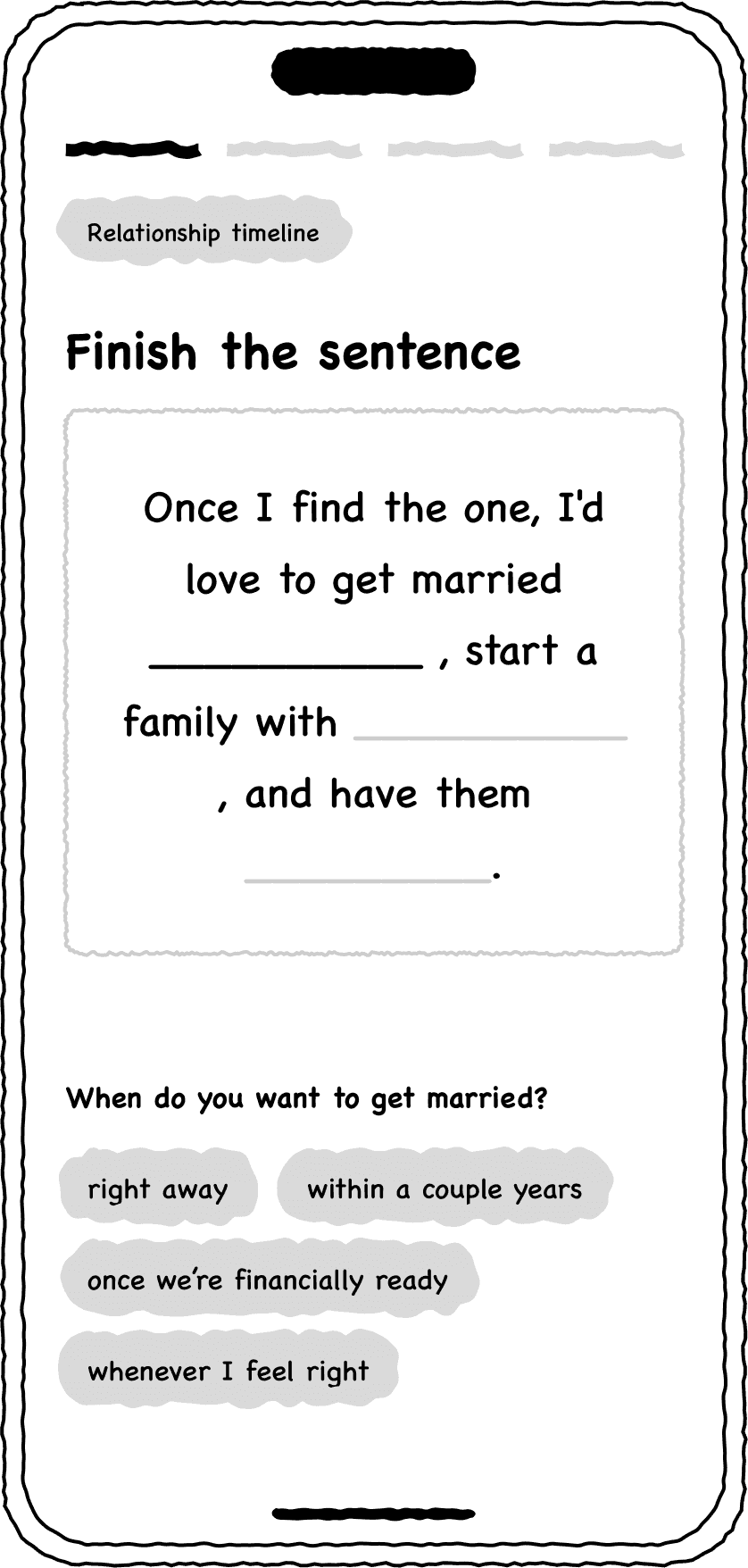
Fig.9: Option B
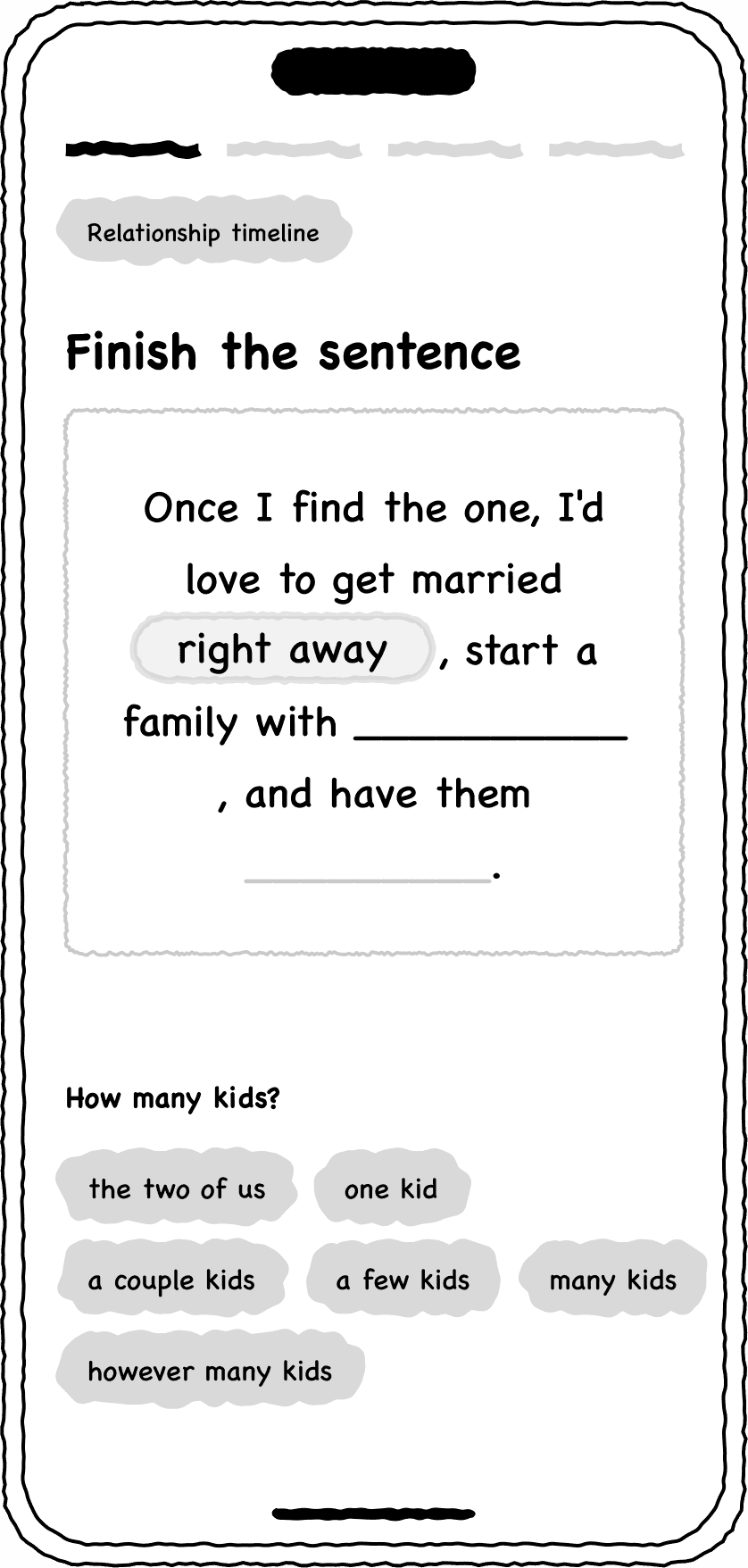
Fig.10: Option B
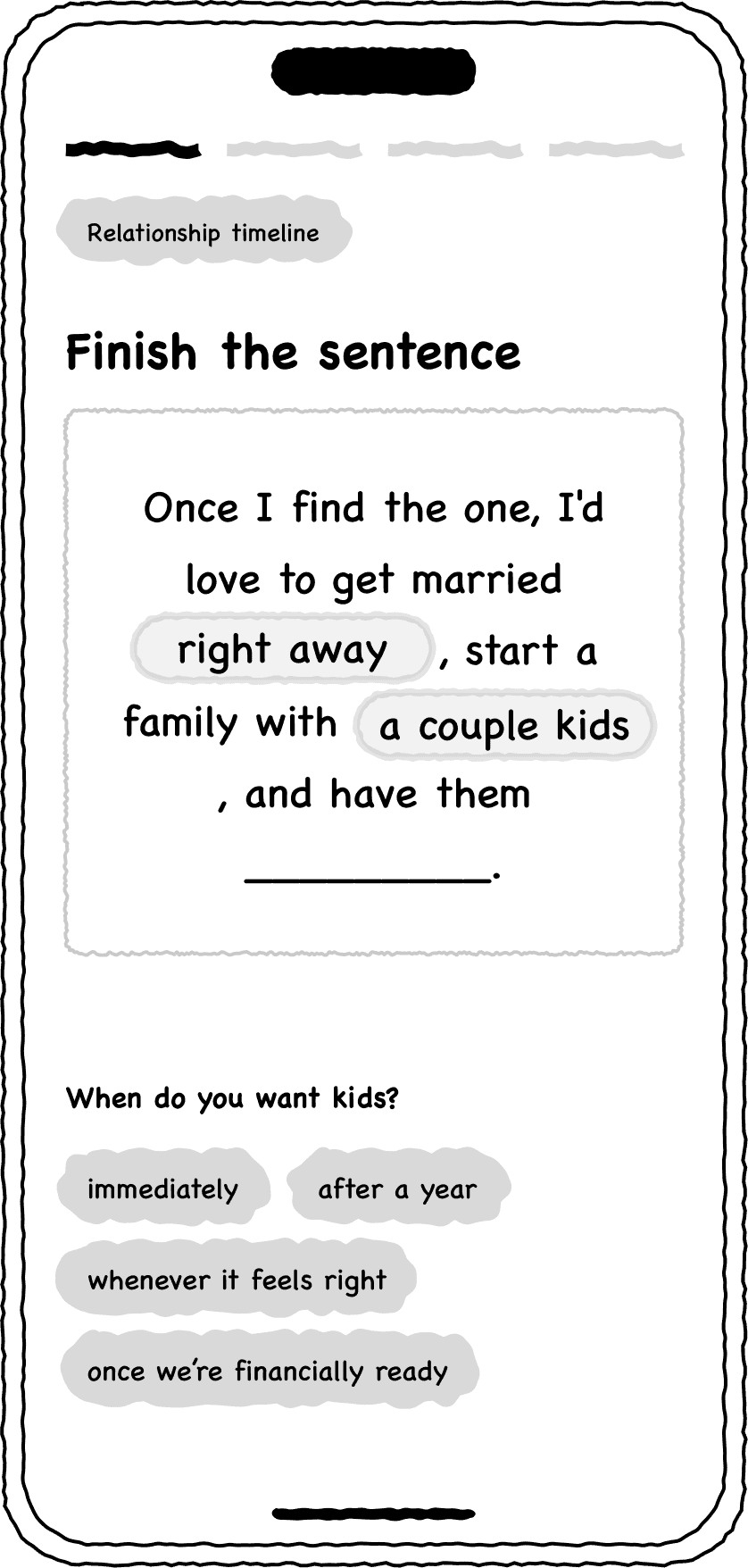
Fig.11: Option B
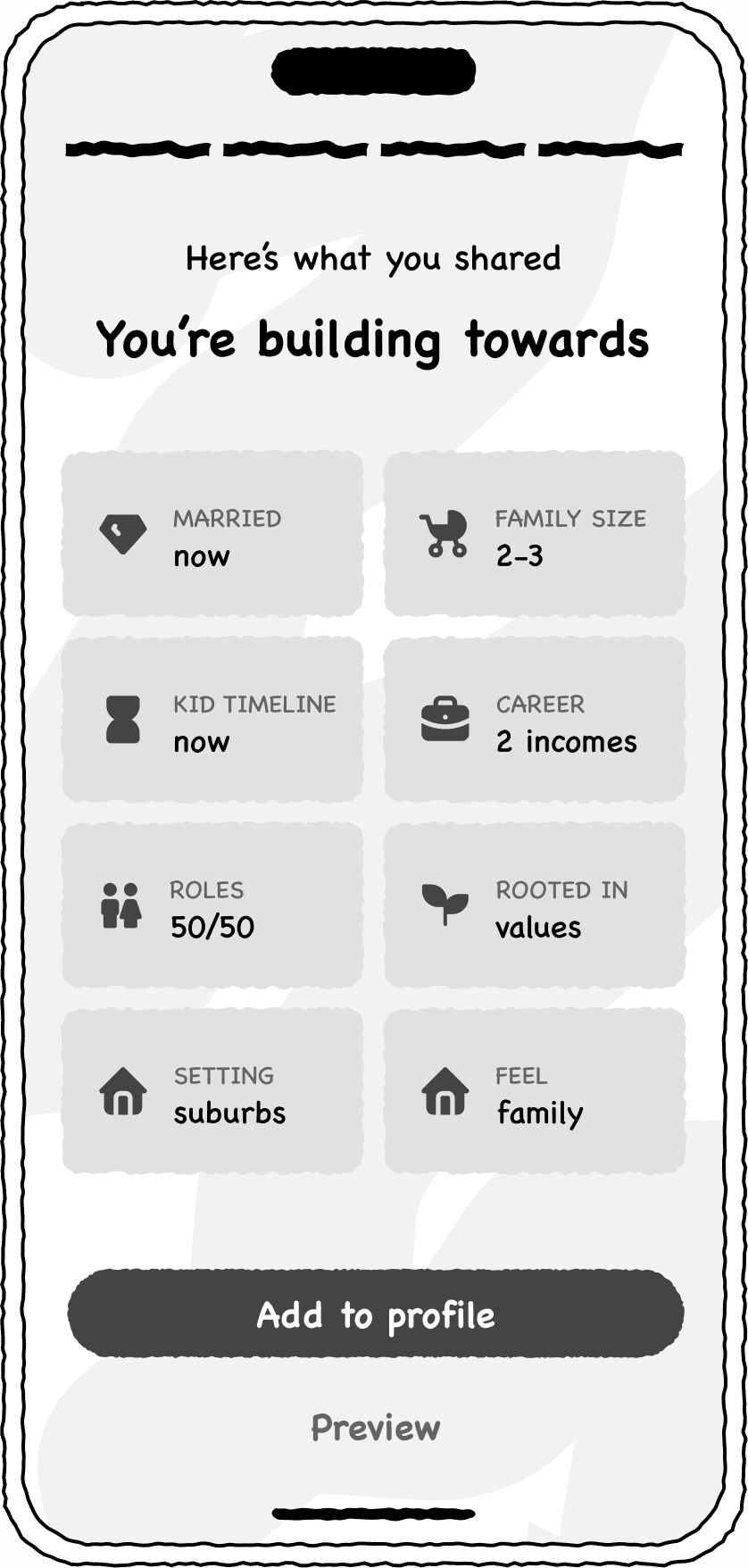
Fig.12: Option B
Key Stage #3
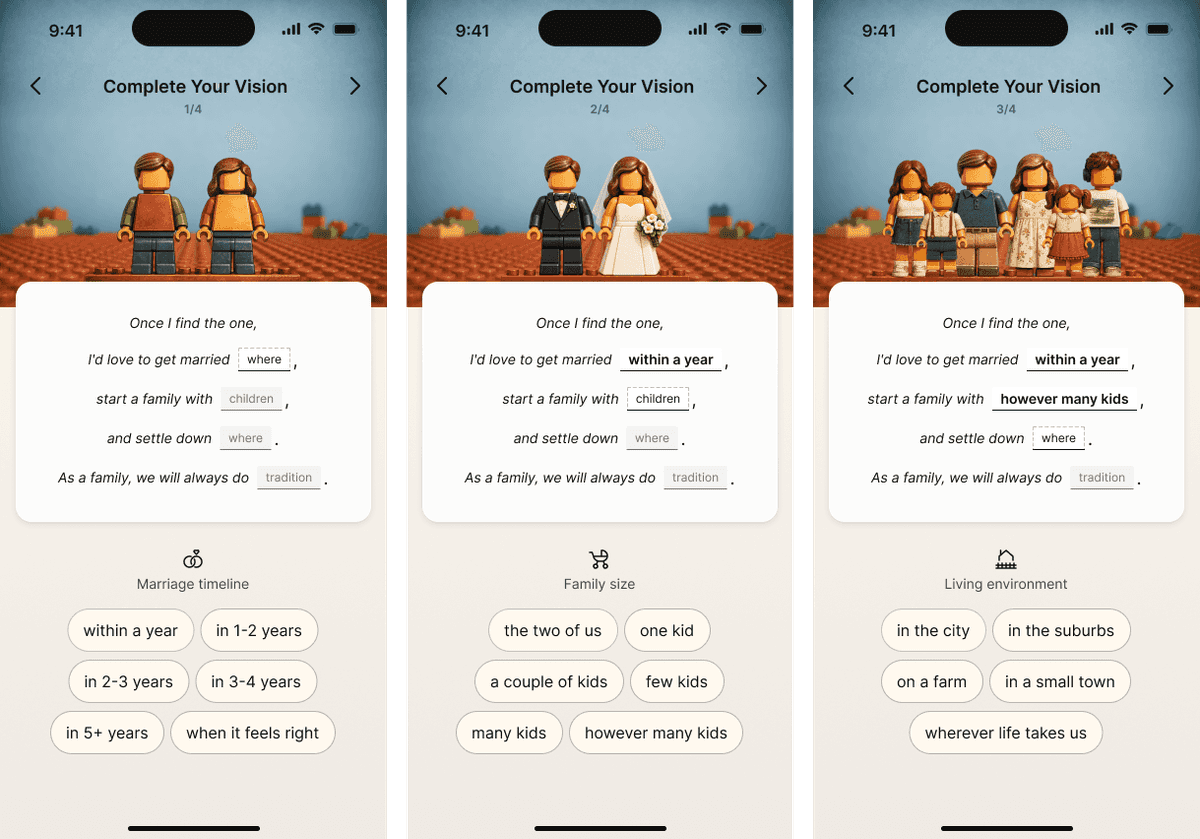
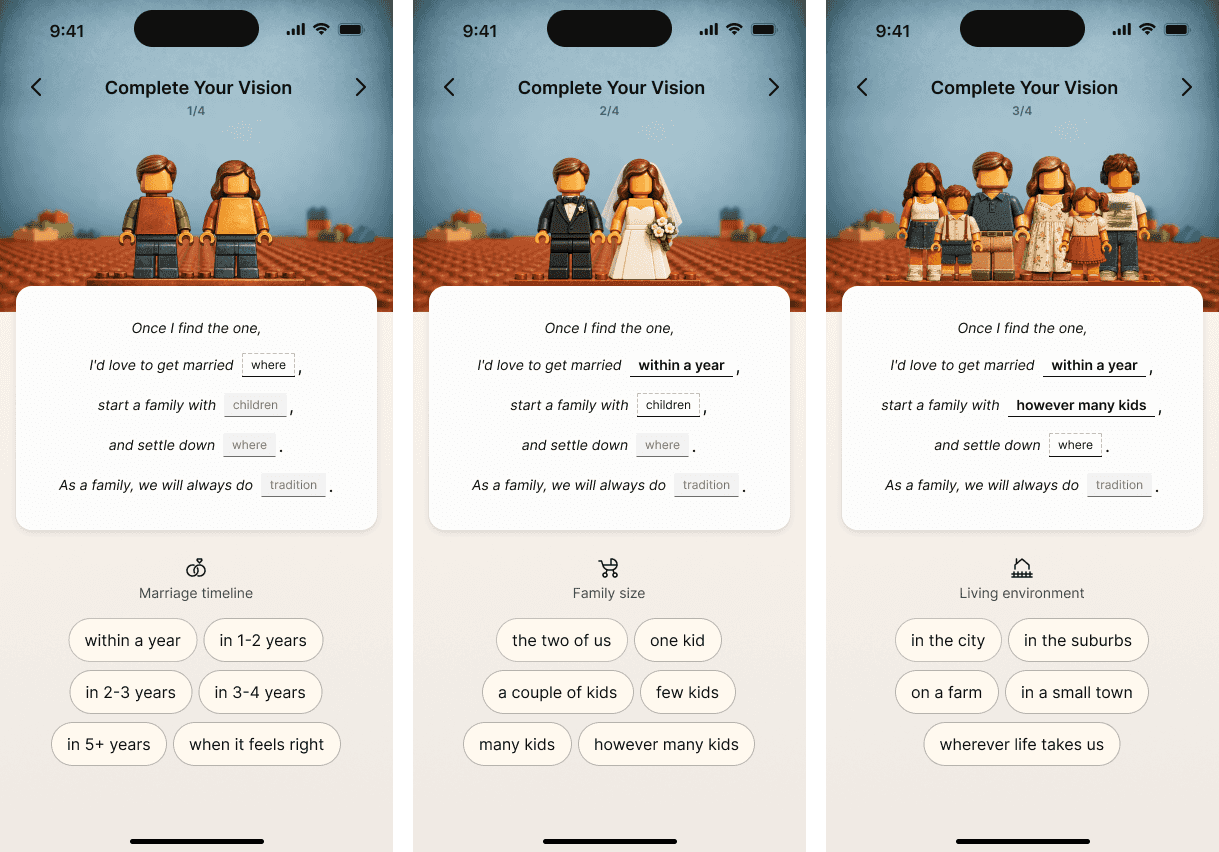
Fig.13: "The Toy Story"
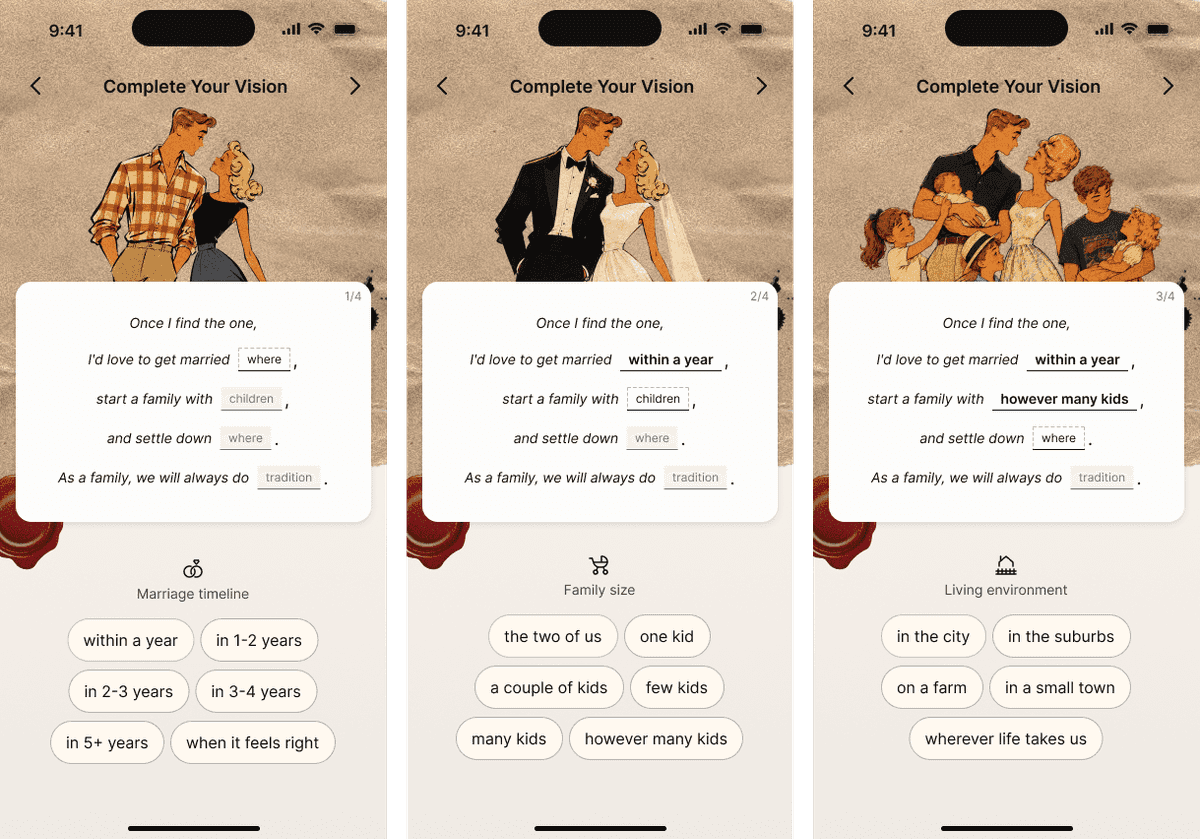
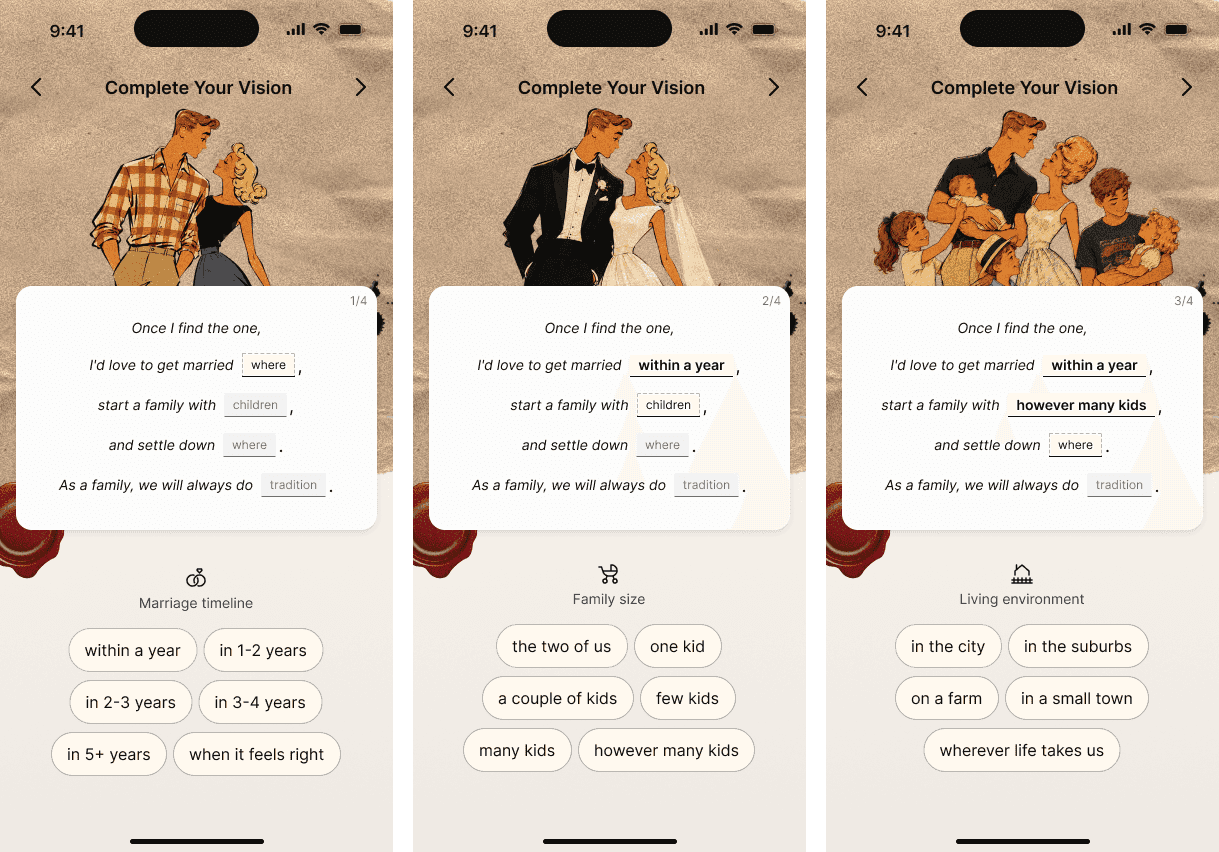
Fig.14: "The Retro Illust"
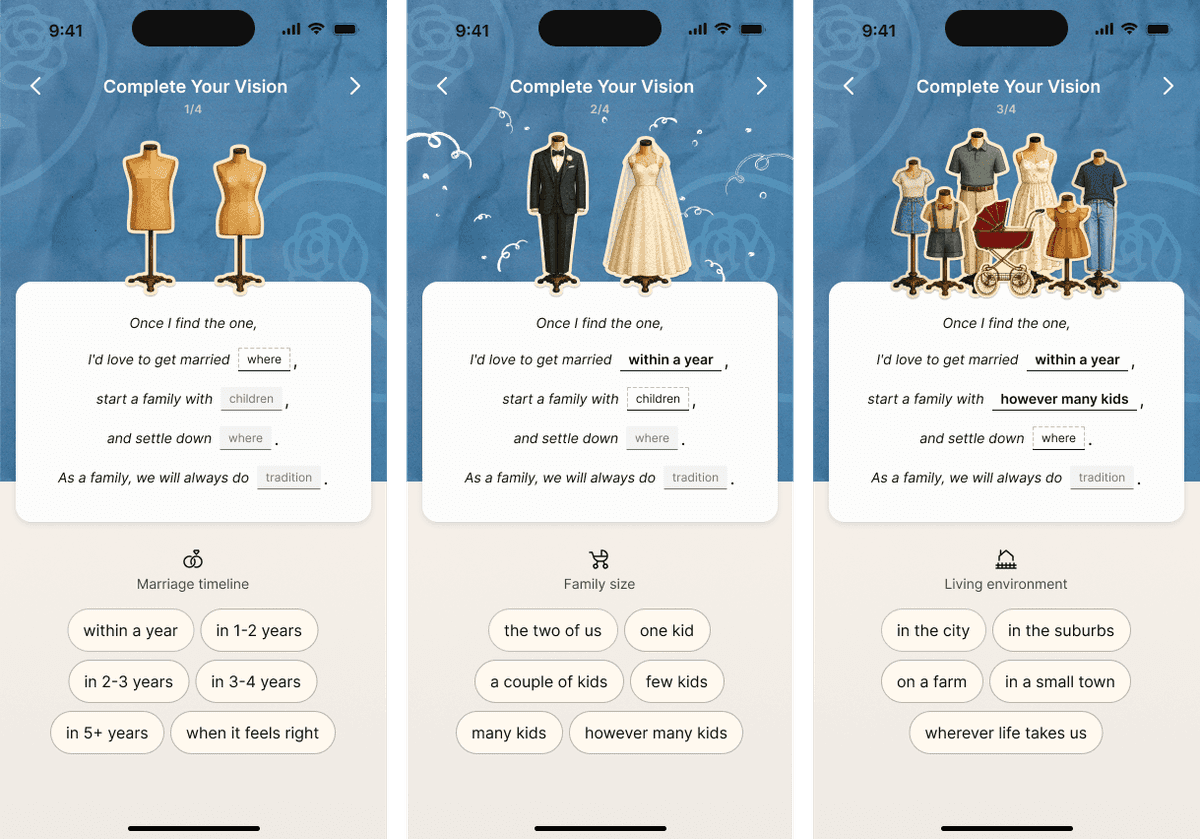
Fig.15: "Boutique Stickers"
Key Stage #4
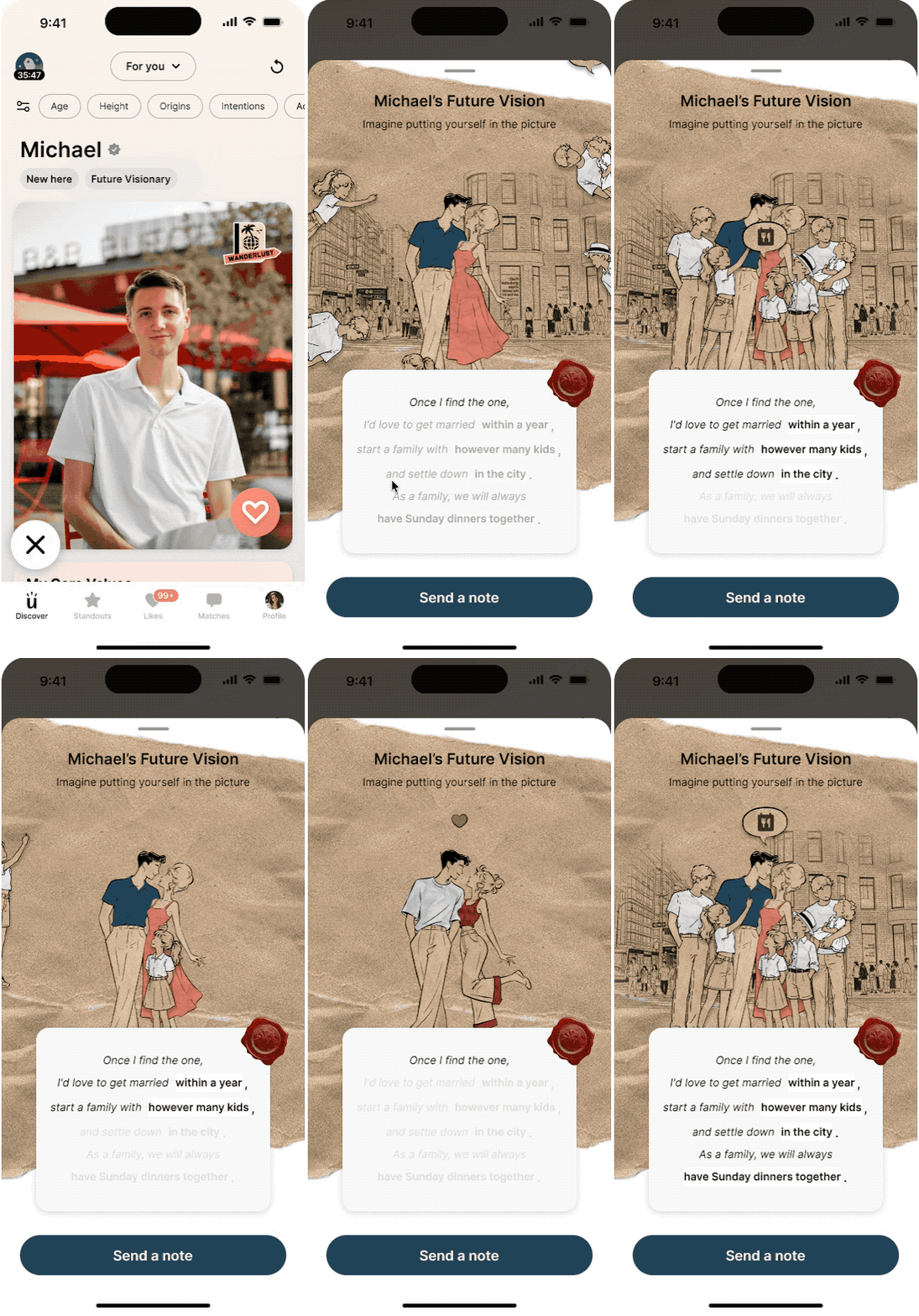
Fig.16: Discover
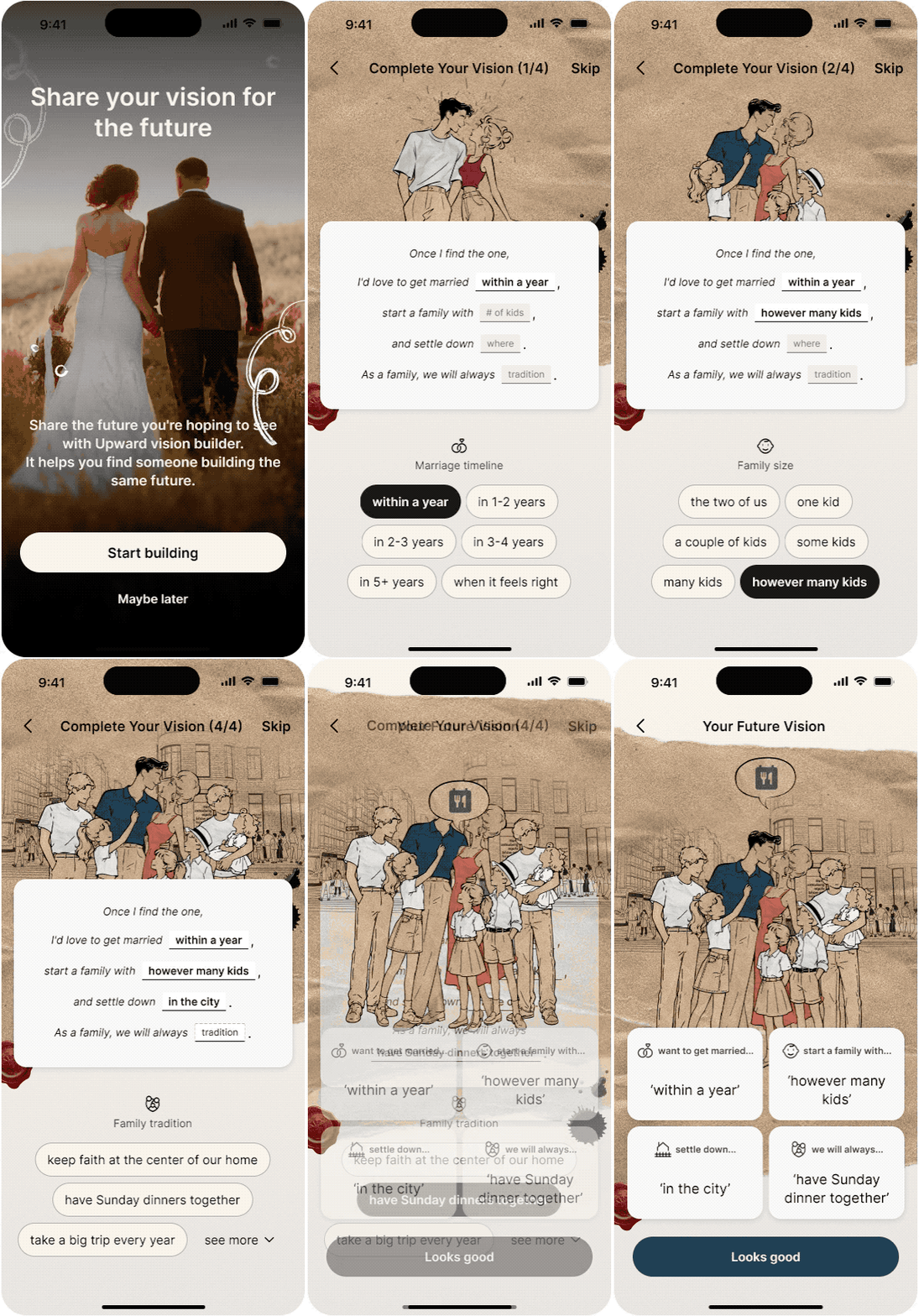
Fig.17: Onboarding
Learnings
Future Vision
Helping people express the future they envision—and discover whether it aligns with someone else's.
- 71% 📲 Feature Adoption
- 87% 💪 Positive Rate
- 92% 💡 Uniqueness Rate


The challenge
- Product issue
- As Upward doubles down on marriage-focused dating, it needs a way for users to express and assess long-term compatibility.
- User Test Finding
-
"I hate when I'm talking to someone and find out we want something completely different..."
- Product goal
- Help users express their vision for the future and discover where it aligns with others'.
- Design challenge
- How might we help users express and explore their vision for the future without writing an essay?
Exploring: Making the abstract tangible
- Metaphor-driven
- Borrow familiar real-world metaphors, like building blocks, to make an abstract future feel tangible.
- Narrative-driven
- Turn utilitarian forms into a visual story, bringing choices about marriage, family, home, and traditions to life.
Testing: How users would tell their story
- Option A — 'Future Storybook'
-
- A playful, illustrated experience that evolves as users make choices.
- Pros: Emotionally engaging; makes serious topics feel approachable.
- Cons: May make information harder to scan on someone else's profile.
- Option B — 'Structured Future Profile'
-
- A structured, text-based experience designed for clarity and efficiency.
- Pros: Easy to scan and compare at a glance.
- Cons: Feels like filling out a job application.
Visualizing: How to bring the story to life
- 01. Toy-Inspired Building Blocks
-
- A playful building-block aesthetic.
- Risk: Potential copyright concerns.
- 02. Retro Illustration
-
- A nostalgic illustration style aligned with the new brand.
- Risk: Could reinforce stereotypes.
- 03. Boutique Stickers
-
- A sticker-based visual language aligned with the existing style.
- Risk: Could limit the range of stories expressed.
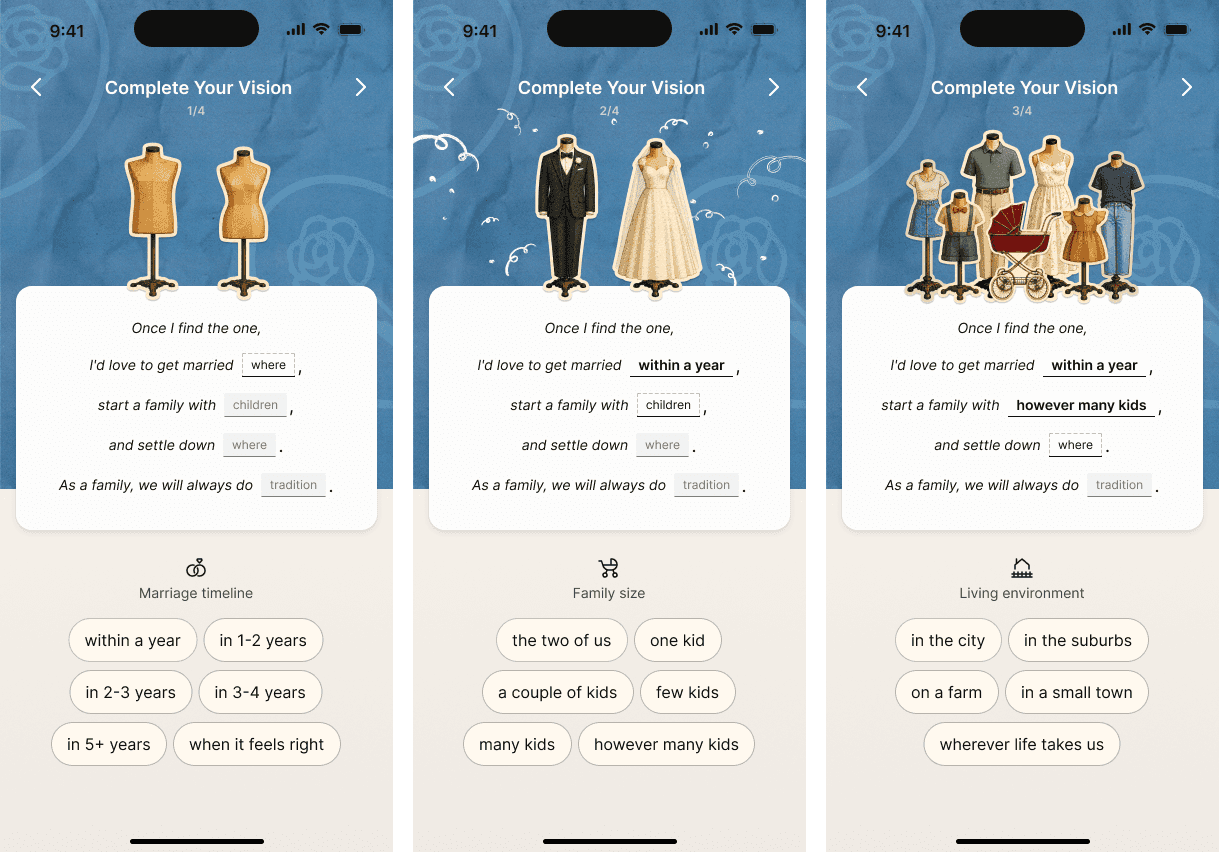
Final design: A refined retro aesthetic
The result: a two-part experience — build your vision, then discover someone else's.
- PART A — STORYTELLING EXPERIENCE
-
- Express your future
- Make envisioning the future feel approachable and personal.
- Integrates into the onboarding flow.
- PART A — STORYTELLING EXPERIENCE
-
- Discover someone else's
- Make another person's vision easy to understand at a glance.
- Integrates into the discover flow.
"It's not how long it takes, but how it feels."
Visual storytelling can make abstract ideas easier to understand and discuss. But the experience should never make a personal vision feel like a contract.
The best design provides enough structure to communicate what matters while leaving room for nuance.